The Smartest Choice for Your Campus' Floors
Universities are like little cities. A campus constantly hums with activity, 24 hours a day. Vast and varied, it sprawls across a large acreage, consisting of multiple structures and different types of facilities. From student housing to sports, laboratories to libraries, cafeterias to classrooms, each zone within a university requires a different kind of floor.
If you think you can run with a single type of flooring across the entire campus, think again, because chances are that you'll encounter problems. From safety to durability, cost-effectiveness to cleanliness, maintenance to manoeuvrability, acoustics to aesthetics, there are so many elements that need to be factored into consideration.
5 Key Factors to Consider When Choosing University Flooring
1. Footfall:
University campuses are home to a large population of people. Whether its students or faculty, administrative staff or maintenance crews, the flow of human traffic is constant. The flooring must be able to withstand constant movement, heavy footfall, and remain resilient against wear and tear. Durability plays a large role for floorings in universities.
2. Maintenance:
A university campus is enormous, and both indoor and outdoor flooring must be durable and low maintenance. Smooth surfaces that do not attract dust, grime and dirt, which can be easily vacuumed and mopped easily are essential.
While classrooms, labs, studios and cafeterias may be indoors, sports facilities, swimming pools, and recreational areas are often outdoors, and the flooring needs to be suitable for each zone.
3. Safety:
With so many people walking across campus, safety and comfort is necessary. The surface should be free of seams and creases to prevent people from tripping, and it should not crack or tear due to heavy footfall or weathering. The floor should be anti-slip so people don't fall and hurt themselves.
4. Insulation:
Controlling temperature and noise levels is critical. The flooring should insulate sound, as well as extreme temperatures to make the atmosphere sustainable and conducive to learning.
5. Aesthetics:
A university is an institution, and it needs to look graceful and elegant. A beautiful floor that gives off a rich, warm and welcoming look and feel sets the tone for the education it offers.Colour therapy plays a large part in nurturing young minds and today flooring is one of the largest expanses anyone sees in any institution. Floorings used correctly can be used for way finding, changing moods and enhance learning behaviour in children or young adults.
ZONING INTO THE DIFFERENT AREAS ON CAMPUS:
Every university is different, but depending on the location, square footage, and the kind of institution, each area will require a different kind of flooring based on what it is used for.
Square Foot breaks it down for you, zone by zone:
Learning Areas - Lecture Rooms & Classrooms:
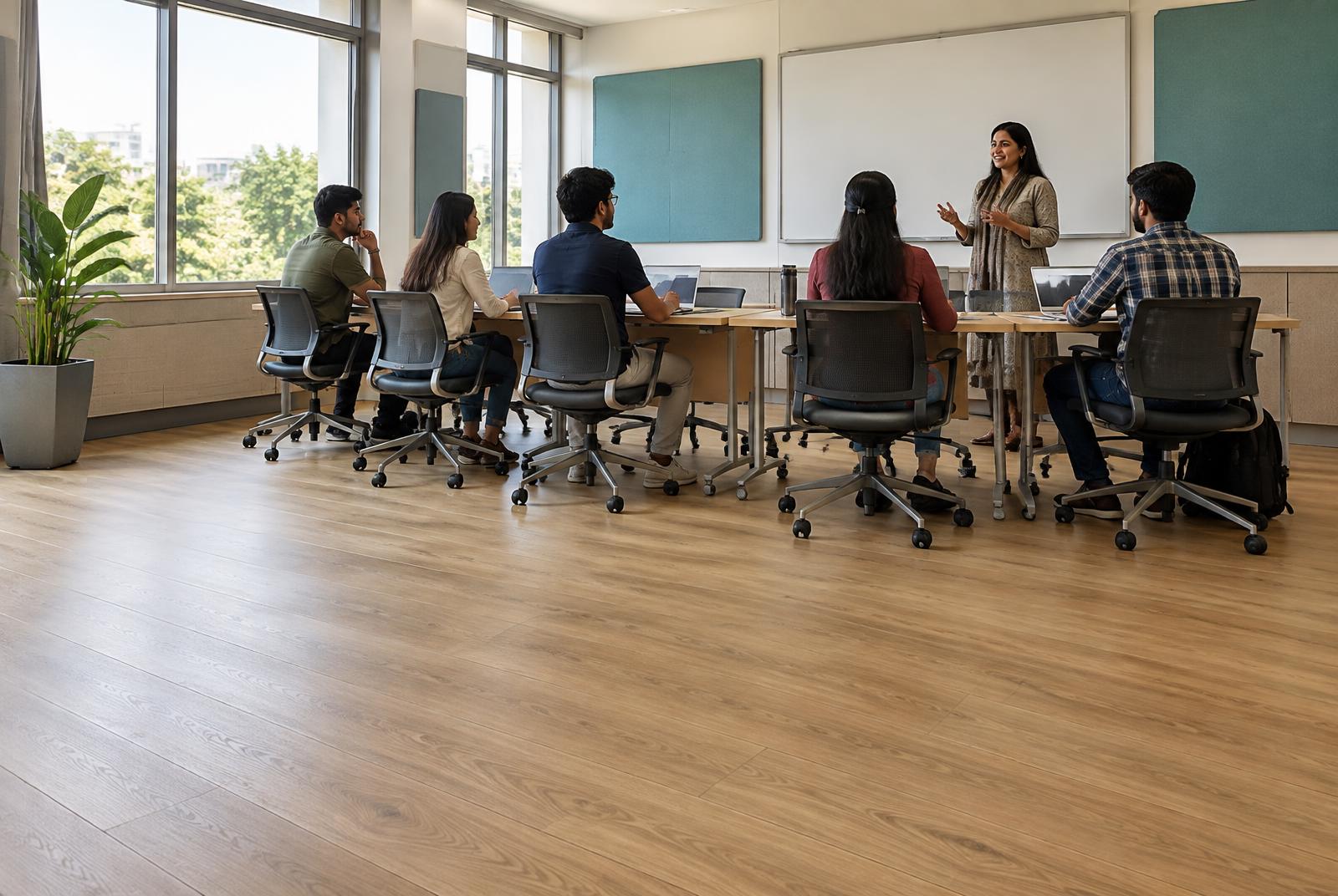
Durability, cleanliness and acoustics are key. Lecture rooms and classrooms not only experience heavy footfall, but furniture such as chairs and tables/desks may be moved across the floor frequently. Learning areas need to be quiet so that the students can concentrate while classes are in session, and good acoustics are essential, as the audience of students can be large.
Science & Innovation - Laboratories:
Different kinds of labs require different kinds of floors, depending on what you are experimenting with. For chemistry and biology labs, we recommend vinyl flooring, particularly because it is extremely hygienic, antimicrobial, and very easy to clean. Vinyl can also be covered up the walls to provide a flawless, seamless surface. Anti-static and flame-retardant vinyl roll also works well for physics labs, but if you have a lot of electronic or mechanical equipment, epoxy flooring could also be an option.
Going Digital - Computer Labs:
Computer centres have a lot of wiring and equipment. The flooring needs to be flame-retardant and anti-static to prevent shocks and fires.
Quiet Zones - Libraries, Reading Rooms and Study Carrels:
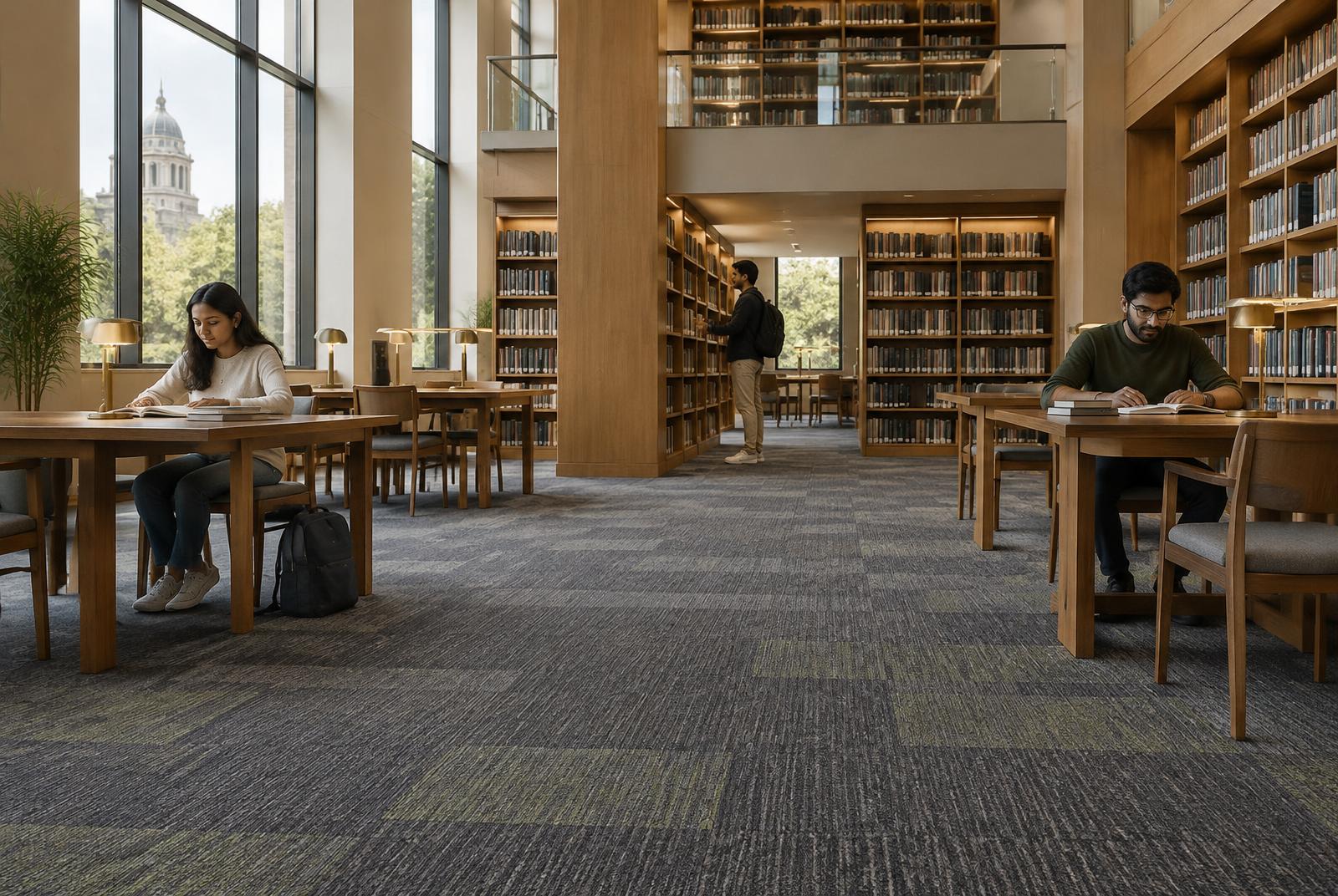
In quiet areas, the flooring needs to cushion sound as much as possible. Carpet, LVT or EcoFit flooring, which is specially engineered to reduce sound, are excellent options.
Centre Stage - Auditoriums and Studios:
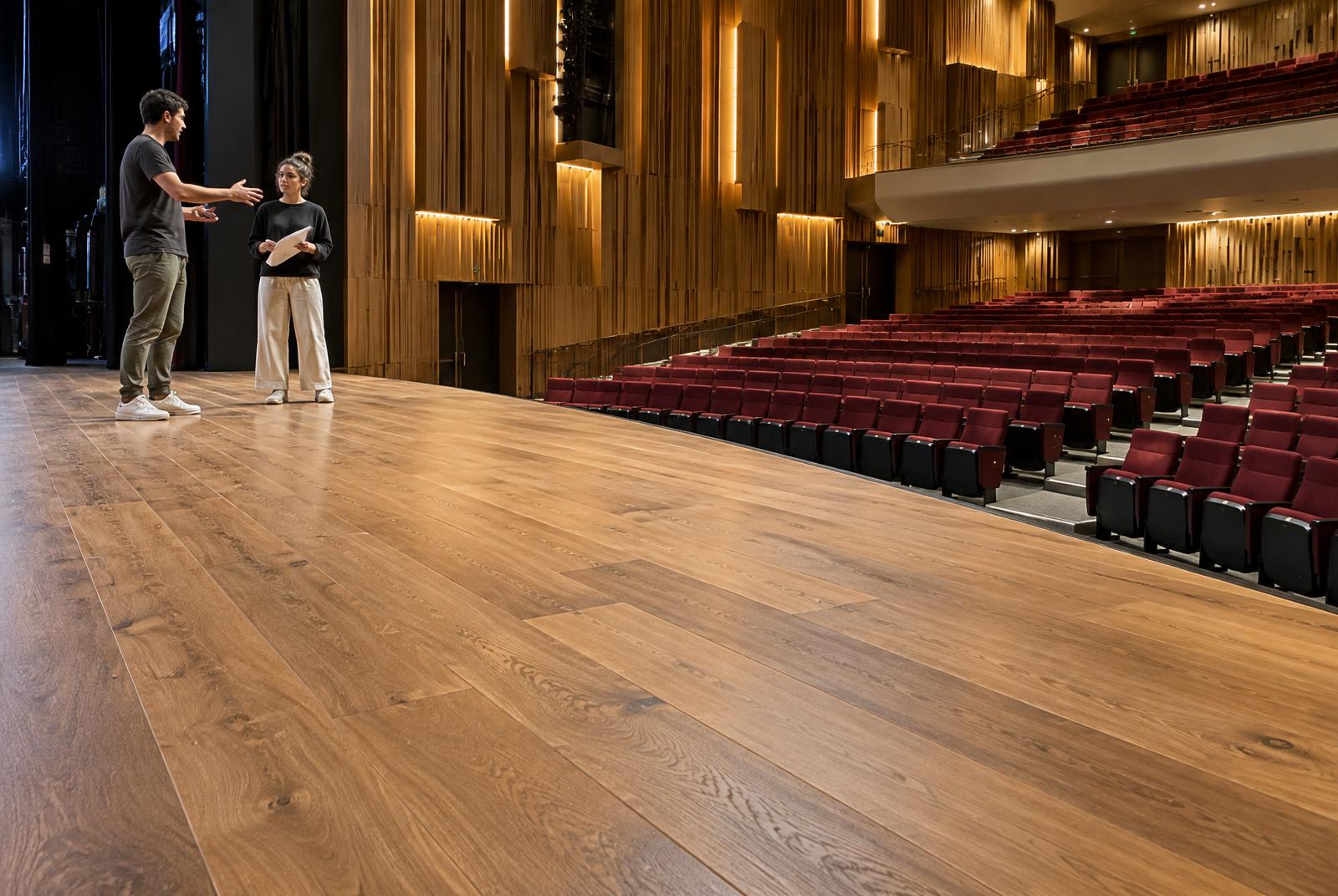
Acoustics and comfort underfoot are key in an auditorium. While carpet is best for audience seating zones, the stage needs a well-sprung wooden floor. Engineered or solid wood floors are ideal for the stage and optimise sound.
Better Living - Student Housing:
Hygiene and safety are the most important factors in student residences, followed by durability, sound insulation, and aesthetics. In wet areas such as restrooms and kitchens, the flooring needs to be leak-proof and anti-slip. SPC and vinyl flooring are smart and cost-efficient solutions for student housing.
Vinyl works well for student housing zones because of its antiviral and antimicrobial properties. SPC and vinyl are also flame-retardant and anti-static. Square Foot's vinyl flooring is manufactured by Tarkett and has the lowest VOC emissions of any vinyl worldwide, enhancing the air quality in residential areas. SPC is extremely stable underfoot, and this makes it a very safe surface.
Smooth and grout-free, vinyl and SPC are both very easy to clean, extremely durable, and easy to maintain. It comes in a variety of colours and designs, creating a low-maintenance yet aesthetic ambience that feels welcoming.
Floors That Score - Sports Areas:
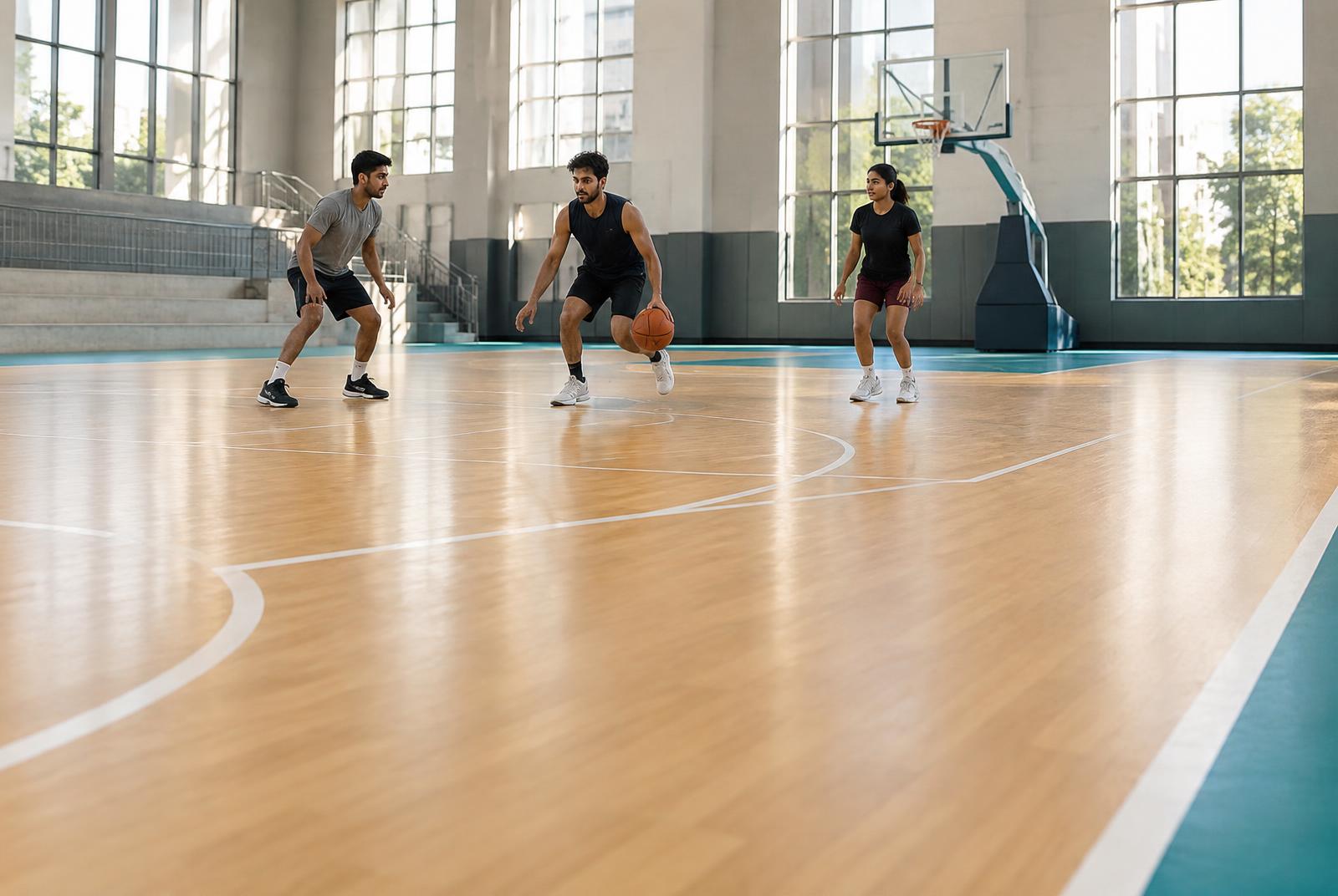
Indoor courts, gyms and dance or exercise studios need a well-sprung floor, which does not scuff easily and is comfortable to move on. Cushioned vinyl that has been engineered for sports is an ideal choice. It is durable, comfy underfoot, and extremely cost-effective.
Vinyl flooring is seam-free and leak-proof, making it extremely safe. It is anti-microbial and the seamless surface prevents fungus and mould from growing in grout or cracks, making it ideal for humid and moist climates. Vinyl's shock absorption is very good, making it easy on the joints and ideal for high-impact training and sports like basketball or volleyball.
Engineered wood is more expensive but is extremely long-lasting and offers excellent value for money. Engineered wood planks can be refinished to give them a longer lease on life, and wooden flooring is a top choice for dance, yoga and exercise.
Square Foot's outdoor flooring is ideal for pool decks and outdoor recreational zones. It is weather-proof, easy to clean, and extremely durable. Made from bamboo fibre, polyethene, and chemical additives, our outdoor flooring is both durable and eco-friendly. The surface is specially brushed to make it slip- and skid-resistant, creating excellent traction underfoot.
Food for Thought - Cafeterias, Kitchens and Food Courts:
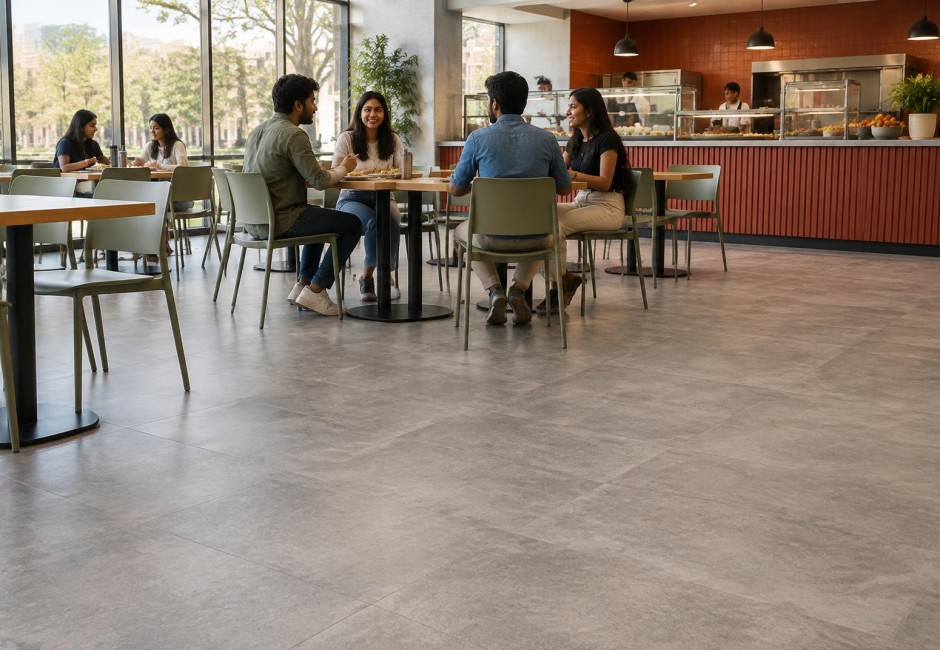
Cafeterias, kitchens and food courts experience high traffic that surges at certain times of day. Hygiene is paramount, and vinyl flooring is our top choice for these areas because one can easily wipe off any spills or drips, the surface is antimicrobial, and its anti-static and flame-retardant properties make it ideal for a large commercial kitchen with lots of equipment.
Low VOC emissions make it an environmentally sustainable option and keep the air fresh. Vinyl roll or LVT are ideal for seated dining areas, where aesthetics and practicality both need to be considered. Durable and long-lasting, vinyl doesn't get scuffed and scratched even if there is a lot of foot traffic or furniture being moved across it.
Grand Reception - Public Areas and Administrative Zones:
Universities have several public reception areas, hallways and offices, and in these areas acoustics and aesthetics take priority. Carpet, engineered wood, or solid wood are excellent options to consider. Laminate wood is a cost-effective, easy-to-clean option for administrative offices, while engineered wood or solid wood creates an elegant feel in public reception areas.
When constructing a university campus, cost and time are major factors. Keeping costs down while optimising quality and construction time is very necessary. Making smart flooring choices not only keeps your initial overhead low but also keeps long-term maintenance costs at a minimum.
Flooring that is durable, safe, hygienic, easy to clean and easy to repair is a must when designing a university campus. Square Foot's team of flooring experts are happy to advise you on the best options available for your campus flooring needs, keeping in mind the location, facilities, installation, climate, and size of the student population.
Contact us today to discuss your exact requirements, and our team will be happy to guide you on how to make the smartest choice to give your institution that timeless feeling.
Best Flooring Options for Different University Campus Areas
Every university is different, but depending on the location, square footage, and the kind of institution, each area will require a different kind of flooring based on what it is used for.
| University area | Flooring options to consider | Main selection priorities |
| Classrooms and lecture halls | Commercial vinyl, carpet tiles or suitable resilient flooring | Durability, acoustics and easy cleaning |
| Science and research laboratories | Specialist vinyl or other laboratory-specified flooring | Chemical compatibility, hygiene and safety |
| Computer laboratories | Flooring with suitable static-control properties, where required | Electrostatic control and equipment protection |
| Libraries and reading rooms | Carpet, acoustic flooring or suitable LVT systems | Noise reduction, comfort and maintenance |
| Auditoriums and performance spaces | Carpet for selected seating areas specialist wood flooring for stages | Acoustics, appearance and performance |
| Student hostels and residences | Vinyl, SPC or other suitable residential flooring | Cleaning, durability, comfort and moisture suitability |
| Indoor sports halls and gyms | Specialist sports vinyl, sports wood or other approved sports systems | Shock absorption, traction and sport-specific performance |
| Outdoor recreation areas and pool decks | Suitable outdoor decking or purpose-designed exterior surfaces | Weather resistance, drainage and slip resistance |
| Cafeterias and food courts | Commercial vinyl or other food-service-suitable flooring | Cleaning, spill management and slip resistance |
| Reception areas and administrative offices | Carpet, LVT, laminate or engineered wood, depending on use | Appearance, durability and acoustic comfort |


